
Table of Contents
What Does “1 2 Cow” Actually Mean?
When people talk about a “1 2 cow”, they are usually referring to buying a half of an entire beef animal from a butcher or farm. This is often called a half beef, side of beef, or half cow share. The weight you actually take home depends on several factors, including the size of the animal, how it’s butchered, and whether you choose bone-in or boneless cuts. Typically, a half cow will yield between 180 to 300 pounds of packaged meat, depending on the size of the cow and the types of cuts you select. The term can be a little confusing because there is a difference between the hanging weight—the weight of the carcass before it is cut—and the take-home weight, which is the meat after it has been cut, trimmed, and packaged. Understanding this difference is crucial because it determines how much freezer space you actually need. For instance, a larger cow might yield a half that is closer to 300 pounds of meat, while a smaller cow might only give you 180–200 pounds. The cuts are typically portioned into steaks, roasts, ground beef, ribs, and other sections, and the packaging method—vacuum-sealed or butcher-paper wrapped—also affects the space they occupy in your freezer. In short, a 1 2 cow is more than just “half a cow” in weight; it’s the total packaged meat ready for storage, which directly ties into how you plan your freezer space.
How Much Freezer Space for a 1 2 Cow Do You Need?
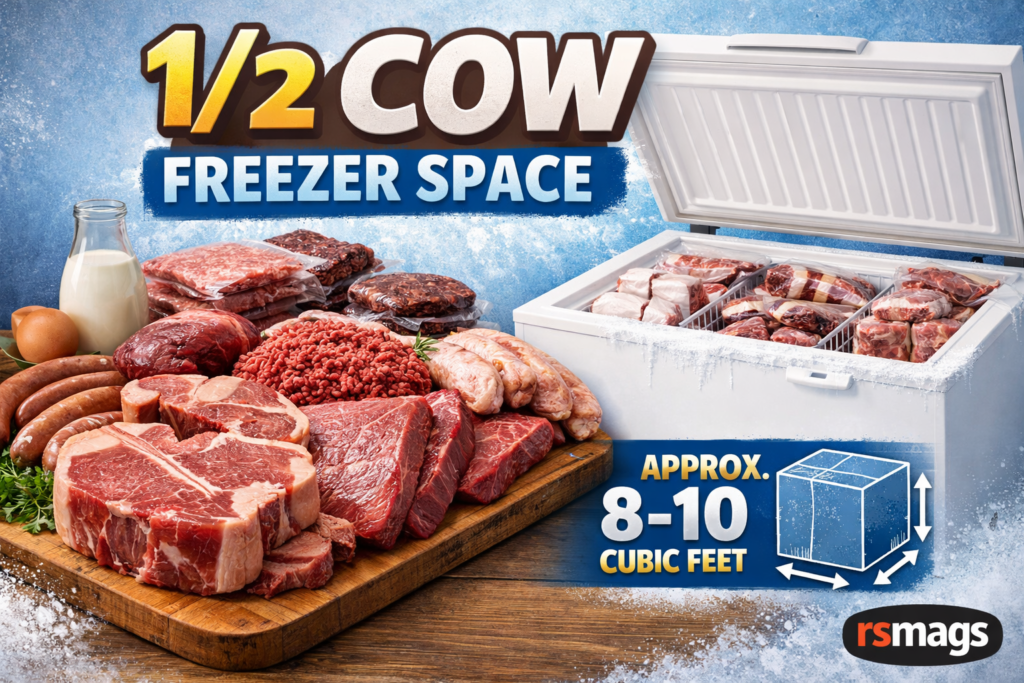
When planning for a 1 2 cow freezer space, one of the most important things to understand is exactly how much room your half beef will occupy once it’s packaged and ready to store. On average, a half cow yields between 180 to 250 pounds of meat, but this can vary depending on the size of the cow, the cuts you choose, and how the butcher packages the meat. A general rule of thumb used by experienced meat processors and farmers is to allocate about 1 cubic foot of freezer space for every 25 pounds of packaged meat. Using this guideline, a half cow will typically require anywhere from 8 to 12 cubic feet of freezer space. This calculation takes into account vacuum-sealed or butcher-paper wrapped portions, which stack efficiently in a chest or upright freezer. For instance, steaks and roasts are usually packed in flat, uniform packages, while ground beef might be portioned in smaller bags, which slightly affects how much space they take. To make this more practical, consider a typical breakdown: if you have 200 pounds of meat, dividing by 25 pounds per cubic foot means you will need around 8 cubic feet of actual freezer space. However, giving yourself a little extra room for organization and airflow is always a smart idea, as tightly packed freezers can restrict cold circulation and increase the risk of freezer burn.
Understanding how much freezer space is required for a half cow also involves looking at the type of freezer you have and how the meat is arranged. Chest freezers tend to offer more usable space because they allow you to stack packages more efficiently, while upright freezers can make it easier to organize different cuts but may lose some cubic footage to shelving. The size of your freezer should accommodate not just the meat itself but also some extra space for proper airflow and occasional additions, such as a few extra roasts or special cuts. Many families who buy half a cow find that a 10 to 14 cubic foot chest freezer or a 14 to 18 cubic foot upright freezer works perfectly for storing all the portions comfortably. It’s also worth noting that half cows are often purchased as part of a seasonal plan, so having an adequately sized freezer ensures that your meat stays fresh throughout the months without overcrowding or freezing issues. Careful planning in terms of space, stacking, and freezer type can make managing your half beef much easier and ensures that you maximize every inch of storage while keeping the meat in the best possible condition.
How to Calculate Freezer Space Yourself
Calculating the freezer space needed for a 1 2 cow might seem complicated at first, but it becomes straightforward once you understand the weight of your meat and the space it occupies. The first step is to know the take-home weight of your half cow, which is the total amount of meat you will actually store after the butcher trims and packages it. Most half cows range between 180 and 250 pounds, and the way the meat is packaged plays a significant role in how efficiently it will fit into your freezer. Vacuum-sealed packages take up less space because they are flat and compact, while butcher-paper-wrapped portions are bulkier and require more room. Once you know the total weight, you can use a simple formula: divide the total pounds of meat by 25 pounds per cubic foot to get an approximate minimum freezer size. For example, if your half cow weighs 200 pounds, dividing 200 by 25 gives you 8 cubic feet as a baseline requirement. However, this calculation assumes tight stacking and no wasted space, so it is wise to add an extra 10 to 20 percent of space for airflow, organization, and any extra cuts you may receive unexpectedly. This ensures the meat freezes properly, maintains quality, and avoids issues like freezer burn or uneven freezing.
Another important factor when calculating freezer space is understanding the different types of meat cuts and how they affect storage efficiency. Large roasts and steaks stack neatly and take up predictable space, while ground beef or smaller packages can be tucked into gaps and corners but may require bins or dividers for proper organization. Bone-in cuts generally occupy more room than boneless, so knowing the composition of your half cow will help refine your calculation. Many people make the mistake of relying solely on the hanging weight or take-home weight without accounting for packaging and airflow, which can lead to underestimating freezer space. By carefully considering the weight, packaging method, and type of cuts, you can calculate a freezer size that is not only sufficient for your half cow but also practical for everyday use, allowing you to access the meat easily, rotate stock, and plan meals without constantly rearranging packages. With a clear understanding of these factors, anyone can confidently choose a freezer that will handle a half cow efficiently and keep the meat fresh and safe for months.
Types of Freezers: Chest vs Upright & Which Is Best
When choosing a freezer for your 1 2 cow freezer space, understanding the differences between chest freezers and upright freezers is essential because it affects how efficiently you can store and access your meat. Chest freezers are generally considered the best option for storing large quantities of meat because they provide more usable cubic footage and allow you to stack packages neatly. The wide open interior of a chest freezer lets you arrange steaks, roasts, and ground beef in a way that maximizes space, and they tend to maintain a more consistent temperature since the cold air sinks and stays around the meat when the lid is closed. They are also usually more energy-efficient than upright models, which can save money in the long run, especially if you are storing a half cow for several months. On the other hand, chest freezers can be a little more challenging to organize, as it may require bins, baskets, or dividers to separate different types of cuts and make them easy to find when you need them. Despite this, for anyone buying a half cow, a chest freezer in the 10 to 14 cubic foot range is often ideal, providing plenty of room for all cuts without overcrowding.
Upright freezers, in contrast, offer the advantage of easier access and better visibility because they have shelves and compartments, making it simpler to find specific cuts without unpacking the entire freezer. This can be especially helpful if your half cow has a variety of cuts and you want to grab a specific roast or package of ground beef without digging through layers of meat. However, upright freezers usually have slightly less usable space than chest freezers of the same cubic footage because shelves and compartments take up room, and they may not retain cold as efficiently if the door is opened frequently. For a half cow, an upright freezer in the 14 to 18 cubic foot range can work well, though careful organization is needed to make full use of the space. Ultimately, the choice between chest and upright freezers depends on your storage priorities: if your goal is maximum space and efficiency, a chest freezer is better, but if ease of access and organization is more important, an upright freezer may be preferable. Either way, understanding your needs and planning accordingly will ensure that your half cow stays frozen, safe, and easy to manage throughout the months.
Where to Place Your Freezer & Prep Tips
Proper placement of your freezer is just as important as choosing the right size when storing a 1 2 cow, because location affects efficiency, temperature stability, and even energy costs. Ideally, your freezer should be placed in a cool, dry area such as a basement, garage, or utility room where the temperature stays relatively constant. Extreme heat or cold can cause the freezer to work harder, potentially raising energy bills and affecting how well the meat stays frozen. You also want to leave enough space around the unit for proper airflow, as poor ventilation can reduce cooling efficiency and shorten the freezer’s lifespan. Some people make the mistake of putting their freezers against walls or in cramped corners, which can restrict airflow and make it harder to maintain a consistent temperature, leading to uneven freezing or the risk of freezer burn. Preparing the area beforehand is crucial, especially if you are expecting a delivery of a half cow, as having a clean, accessible space allows you to unpack and organize meat immediately, preventing it from sitting out too long and maintaining the best quality.
In addition to location, there are several preparation tips that can help you maximize your 1 2 cow freezer space. Before your meat arrives, it’s a good idea to measure your freezer interior and plan how you will stack different cuts, keeping similar types together so you can find what you need quickly. Using baskets, bins, or dividers can help create sections for roasts, steaks, ribs, and ground beef, which not only saves time but also improves airflow and prevents packages from getting crushed. Labeling each package with the cut and date ensures you use older meat first, keeping your inventory organized and reducing waste. For vacuum-sealed packages, you can stack them flat to save space, while bulkier bone-in cuts might be better placed vertically or on the sides. Another helpful tip is to leave a little extra room on top or around packages so cold air can circulate freely, which is especially important when storing large quantities like a half cow. By carefully planning placement and organization, you can make sure your meat stays frozen, fresh, and easy to access, and you will make the most out of the freezer space you have for a half cow without constantly struggling to fit everything inside.
Freezer Organization Tips for a Half Cow
Organizing your freezer effectively is one of the most important steps to ensure that your 1 2 cow remains in top condition and that you can access the cuts you need without hassle. When dealing with a half cow, the variety of cuts—steaks, roasts, ribs, ground beef, and smaller portions—can make it easy for packages to get lost or buried if not planned carefully. A practical approach is to group similar cuts together and keep frequently used items toward the top or front for easy access. For example, roasts and steaks can be stacked flat in one section, ground beef can be placed in smaller bags that fit into gaps or baskets, and ribs or other specialty cuts can occupy a separate area. Labeling each package clearly with the cut type and date it was frozen is essential, not only to maintain an organized system but also to help you rotate stock so older packages are used first. Keeping a small inventory list outside the freezer can also save time and reduce the number of times you open the door, which helps maintain a stable temperature and preserves the quality of your meat. Many families find that using bins or baskets inside a chest freezer creates a mini-sectioned system, making it easy to remove exactly what is needed without disturbing other packages.
Proper organization also helps maximize your freezer space for a half cow, allowing you to store more meat efficiently while avoiding crushed packages and wasted space. Vacuum-sealed portions are particularly easy to stack flat, saving room, while butcher-paper-wrapped or bone-in cuts may require slightly more careful arrangement to fit neatly. Leaving a small amount of space between packages or on top allows cold air to circulate freely, which prevents uneven freezing and keeps the meat at a consistent temperature. Planning ahead for future additions is also important, as half cows are often purchased seasonally, and you may receive extra cuts or special orders throughout the year. By combining grouping, labeling, and thoughtful stacking, you can maintain a freezer that is both organized and functional, making meal planning easier, reducing waste, and ensuring that your half cow stays fresh for months. A well-organized freezer not only protects your investment in meat but also gives peace of mind knowing that each cut is properly stored, easy to access, and ready whenever you need it.
Common Mistakes to Avoid When Storing a Half Beef
One of the most common mistakes people make when storing a 1 2 cow is underestimating how much freezer space they actually need, which can lead to overcrowding and uneven freezing. Many first-time buyers assume that a standard kitchen freezer or a small upright unit will be sufficient, but in reality, a half cow requires 8 to 12 cubic feet of dedicated freezer space depending on packaging and the cuts chosen. Trying to cram the meat into too small a space can block airflow, causing some portions to freeze unevenly while others may develop freezer burn. Another frequent error is neglecting to plan for proper organization and labeling. Without clear sections for steaks, roasts, ground beef, and specialty cuts, it can become difficult to locate specific packages, and meat at the bottom or back may be forgotten and deteriorate over time. Many people also fail to consider the thickness of bone-in cuts, which occupy more space than boneless portions, or the additional room needed for vacuum-sealed stacks to allow proper air circulation. Overlooking these details can turn what should be a simple storage system into a frustrating and inefficient process that risks the quality of your meat.
Another mistake is poor freezer placement and timing when the half cow is delivered. Freezers placed in areas that experience extreme heat, direct sunlight, or fluctuating temperatures such as garages in summer or near uninsulated walls can cause the unit to work harder, raising energy costs and potentially affecting the meat’s quality. Additionally, not preparing the freezer ahead of delivery can lead to a rushed unpacking process where meat is stacked haphazardly, increasing the risk of damage or uneven freezing. Some buyers also fail to leave space for future rotation or additional purchases, which can create long-term storage challenges. Lastly, people often neglect proper maintenance, such as regularly checking temperature settings, defrosting when needed, and monitoring seals to ensure the freezer stays at a consistent 0°F. Avoiding these common mistakes ensures that your half cow is stored safely, remains fresh, and can be accessed conveniently over several months, making your investment in bulk meat both practical and cost-effective.
Frequently Asked Questions (FAQs)
Many people considering a 1 2 cow have similar questions about freezer space, storage, and meat longevity, and understanding these can make the entire process much easier. One common question is whether 8 cubic feet is enough for a half cow, and the answer depends on how the meat is packaged and the cuts included. For tightly vacuum-sealed packages with mostly boneless cuts, 8 cubic feet may suffice, but most experts recommend 10 to 12 cubic feet to ensure there is room for proper organization, airflow, and occasional extra packages. Another frequent concern is whether a standard kitchen freezer can accommodate a half cow, and in most cases, it cannot unless it is almost empty and well-organized. Kitchen freezers are generally designed for everyday groceries and do not have the cubic footage or stacking flexibility needed for 200 pounds or more of meat. Buyers also want to know how long beef lasts in the freezer, and with proper storage at 0°F, vacuum-sealed steaks, roasts, and ground beef can maintain their best quality for 6 to 12 months, while maintaining a safe temperature is essential for preventing freezer burn and preserving taste.
Other common questions revolve around the organization and maintenance of the freezer once the half cow is stored. People often ask whether it is necessary to label every package, and the answer is a resounding yes, because labeling helps you rotate older cuts first and prevents food waste. Some also wonder whether bone-in or boneless cuts make a difference, and while boneless cuts take up less space, bone-in cuts can be stored efficiently with proper planning, leaving room for flat stacking and airflow. Questions about freezer type, chest versus upright, are frequent as well, and the general guidance is that chest freezers offer more usable space and better temperature retention, while upright freezers make it easier to organize and access specific cuts. Lastly, many people ask about practical tips for maintaining freezer efficiency, and it’s important to keep the unit in a cool area, leave space for airflow, check the temperature regularly, and avoid overloading the freezer at one time. By understanding and addressing these common questions, anyone buying a half cow can confidently plan their storage, maintain meat quality, and make the most of their 1 2 cow freezer space without stress or guesswork.
Conclusion
Storing a 1 2 cow successfully requires careful planning, the right freezer size, and thoughtful organization, and understanding these factors can make the process simple and stress-free. On average, a half cow yields between 180 to 250 pounds of packaged meat, which translates to a need for 8 to 12 cubic feet of freezer space, depending on how the meat is packaged and the types of cuts you choose. Choosing the right type of freezer is equally important, with chest freezers generally offering more usable space and better temperature stability, while upright freezers provide easier access and organization for different cuts. Proper placement of the freezer in a cool, stable environment, allowing for airflow and accessibility, ensures that the meat freezes evenly and maintains its quality over time. Planning ahead by measuring your freezer space, preparing for the incoming half cow, and leaving a little extra room for organization or additional cuts will save both time and frustration. By considering all these factors, families and meat buyers can confidently store their half cow without overcrowding, protecting their investment and keeping their meat fresh and ready for months of use.
In addition to size and placement, organization and maintenance play a crucial role in preserving meat quality and maximizing freezer efficiency. Labeling each package with the cut type and freezing date, grouping similar cuts together, and maintaining an inventory system can make accessing specific packages easy while preventing forgotten or wasted meat. Leaving space for airflow, rotating stock so older packages are used first, and monitoring freezer temperature regularly are also essential steps for long-term storage. Avoiding common mistakes such as underestimating freezer space, overpacking, and neglecting proper temperature maintenance can make the difference between a freezer full of fresh, usable meat and one where some portions lose quality over time. With proper planning, a well-organized freezer, and attention to detail, anyone can enjoy the benefits of buying a half cow, saving money, and having a reliable supply of fresh, high-quality beef available at home. Following these guidelines ensures that your 1 2 cow freezer space is used efficiently, keeps meat safe, and allows you to enjoy all the advantages of bulk meat storage with minimal stress.