
Table of Contents
What Is LED Light Therapy?
LED light therapy is a non-invasive skincare treatment that uses specific wavelengths of light to target skin concerns such as acne, fine lines, and dullness. The most common types of LED light are red, blue, and near-infrared. Red light stimulates collagen production, improves skin elasticity, and reduces fine lines. Blue light targets acne-causing bacteria, helping to prevent and reduce breakouts. Near-infrared light penetrates deeper layers of the skin to improve circulation and overall healing.
Originally developed for NASA to help astronauts heal wounds faster, LED therapy has since been adapted for cosmetic purposes because of its ability to enhance skin health safely and effectively. One of the reasons LED therapy has gained popularity is that it is gentle, pain-free, and suitable for most skin types. Both professional treatments and at-home LED masks rely on this same basic technology, but the way they are applied, their power, and the results you get can vary significantly. Understanding the science behind LED therapy is the first step to knowing whether an at-home device or professional session is right for you.
At-Home LED Mask vs Professional: Core Differences
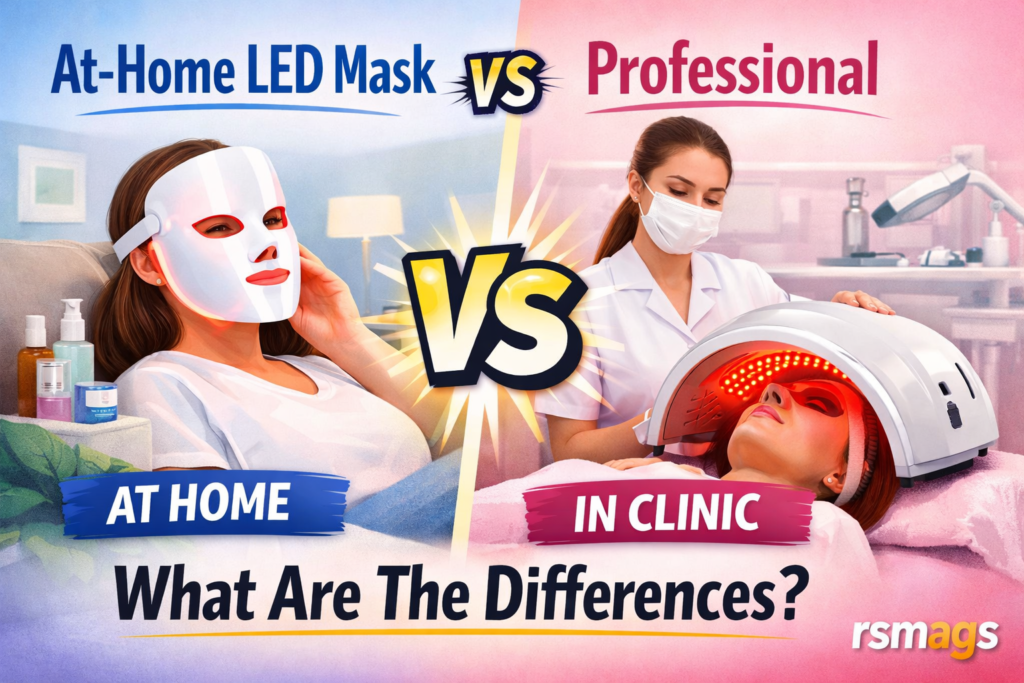
When comparing an at-home LED mask vs professional treatment, the main differences come down to power, customization, and overall results. Professional LED devices are far more powerful than most at-home masks, which allows the light to penetrate deeper into the skin. This higher intensity means professional treatments can stimulate collagen more effectively, reduce fine lines faster, and target stubborn acne with better results. Professionals also have access to multiple wavelengths of light in a single session, allowing them to tailor treatments to specific skin concerns, from redness and inflammation to uneven texture and early signs of aging. At-home masks, on the other hand, are designed with lower intensity to be safe for unsupervised use, which is ideal for daily maintenance and minor skin improvements but usually takes longer to show visible results. While the technology is similar, the difference in power and professional oversight is what sets these two approaches apart, and understanding this can help users set realistic expectations when choosing between them.
Another key difference is customization and guidance. In professional settings, trained aestheticians or dermatologists assess your skin type, concerns, and sensitivities before designing a treatment plan, which ensures that the therapy is safe and effective for your individual needs. At-home LED masks do not offer this level of customization, and users need to rely on general instructions, which may not address specific problem areas or conditions. Professionals can also combine LED therapy with other treatments such as chemical peels, microdermabrasion, or serums to enhance results, which is something at-home masks cannot replicate. However, at-home masks offer convenience, cost-effectiveness, and the flexibility to use the device on your own schedule, making them perfect for people who cannot commit to frequent clinic visits. Overall, while both at-home LED masks and professional treatments use the same underlying technology, the differences in intensity, customization, and supervision make a noticeable impact on results, speed of improvement, and the overall experience, helping users decide which approach aligns best with their skincare goals, budget, and lifestyle.
Results Comparison: How Quickly and Effectively It Works
When looking at an at-home LED mask vs professional treatment, one of the biggest questions people have is how quickly they can expect to see results. Professional LED treatments usually provide faster and more noticeable improvements because they deliver higher-intensity light that penetrates deeper into the skin, allowing the cells to respond more effectively. Clients often notice improvements in skin texture, firmness, and acne reduction after just a few sessions, sometimes within two to four weeks. The ability of professional devices to use multiple wavelengths simultaneously also means that several skin concerns can be addressed in one session, making the treatment highly efficient. Clinical studies have shown that consistent professional LED therapy can significantly increase collagen production, reduce inflammation, and improve skin tone in a shorter period compared to home devices, which often require daily or frequent use over several months to achieve similar effects. This difference in effectiveness is primarily due to power levels, precision, and the expertise of the provider applying the treatment.
At-home LED masks, while less intense, offer the advantage of convenience and long-term consistency, which is crucial for maintaining results. Users who stick to a regular routine with their at-home mask can achieve gradual improvements in skin clarity, reduced fine lines, and overall radiance over time, though the results tend to be subtler compared to professional treatments. It is also important to note that the pace of improvement depends heavily on the user’s commitment, skin type, and specific concerns. For example, someone using an at-home LED mask for acne may need eight to twelve weeks of consistent treatment to see visible reductions, whereas a professional protocol might show significant improvement in just a few weeks. Despite the slower timeline, at-home masks are still highly effective for maintenance and mild-to-moderate skin issues, offering a safe and accessible way to benefit from LED light therapy without frequent clinic visits or higher costs. The key is understanding that professional treatments excel in speed and intensity, while at-home masks provide steady, safe improvements with the convenience of using them on your own schedule.
Cost Breakdown: At-Home LED Masks vs Professional Treatments
When evaluating an at-home LED mask vs professional treatment, cost is one of the most important factors for many people. Professional LED sessions at a clinic or spa can range from $75 to $250 per treatment, and most skin concerns require multiple sessions each week over several weeks or months to achieve optimal results. This means the total cost of a full professional LED therapy program can easily reach $1,000 or more depending on the number of sessions and the provider’s expertise. On the other hand, at-home LED masks are a one-time purchase that typically costs between $150 and $600, depending on the brand, features, and light wavelengths offered. While the upfront investment may seem high, over time, an at-home mask becomes significantly more cost-effective because it eliminates the need for repeated clinic visits, making it a practical option for people who want to maintain consistent treatments without the ongoing expense of professional care.
The cost difference also reflects the level of convenience, intensity, and customization offered by each option. Professional treatments often include personalized skin assessments, tailored protocols, and higher-intensity devices that deliver faster results, which justifies their higher price point. At-home LED masks, while more affordable, require users to take responsibility for proper usage, consistency, and timing to see meaningful results. Additionally, the long-term value of an at-home device is enhanced because it can be used over several years, often replacing the need for frequent professional visits for maintenance treatments. For many people, the decision comes down to balancing budget with desired results and convenience, as professional treatments offer speed and expertise while at-home masks provide affordability, flexibility, and the ability to incorporate LED therapy into a daily skincare routine without disrupting your schedule. Understanding the financial trade-offs can help users make a smart choice that aligns with both their skincare goals and their wallet.
Safety and Risks: What You Need to Know
When considering an at-home LED mask vs professional treatment, safety is a key factor that often influences a person’s decision. Professional LED treatments are generally very safe because they are administered by trained aestheticians or dermatologists who understand how to adjust the intensity, wavelength, and duration to match each individual’s skin type and needs. The professional environment ensures that treatments are applied correctly, minimizing the risk of overuse, burns, or irritation. Clinics often use high-powered devices that are carefully monitored during sessions, and professionals can immediately respond to any signs of skin sensitivity or adverse reactions. This makes professional LED therapy particularly suitable for people with sensitive skin, pre-existing conditions, or those undergoing multiple skin treatments simultaneously, as the guidance and supervision help prevent complications and optimize outcomes.
At-home LED masks, while designed to be safe for unsupervised use, have lower intensity levels to reduce the risk of side effects. Most home devices are FDA-cleared or certified for cosmetic use, meaning they are generally safe for daily or regular use if instructions are followed. However, risks can still occur, especially if the mask is overused, not positioned properly, or combined with skincare products that increase photosensitivity. People with certain medical conditions, those taking medications that make the skin light-sensitive, or individuals with darker skin tones should exercise caution and may benefit from consulting a professional before using an at-home device. Despite these considerations, at-home LED masks remain a low-risk option for most users and provide a convenient way to maintain consistent treatments. The main difference lies in supervision and intensity: professional treatments offer expert monitoring and quicker, more intense results, while home masks prioritize safety and gradual improvement without the need for clinic visits, making them accessible for everyday skincare routines.
Pros and Cons of Each Option
When deciding between an at-home LED mask vs professional treatment, understanding the advantages and disadvantages of each option is essential to make the best choice for your skin and lifestyle. Professional LED treatments offer several significant benefits, including faster results due to higher intensity devices that penetrate deeper into the skin. They are highly customizable, allowing trained professionals to select specific wavelengths and treatment durations tailored to your skin type and concerns. Additionally, professionals can combine LED therapy with other skincare procedures, such as chemical peels or serums, enhancing overall effectiveness and providing a comprehensive solution for anti-aging, acne, or skin rejuvenation. The controlled clinic environment ensures safe and precise application, reducing the risk of irritation or incorrect use. This makes professional LED therapy an ideal choice for those seeking rapid, noticeable results, especially for more severe skin issues or individuals who prefer expert guidance in their treatments.
At-home LED masks, on the other hand, offer convenience, affordability, and flexibility that professional treatments cannot match. They allow users to integrate LED therapy into their daily routines without scheduling appointments or traveling to a clinic. While the results are typically slower and less dramatic than professional sessions due to lower light intensity, consistent use can still provide meaningful improvements in skin texture, tone, and overall radiance. At-home masks also reduce the long-term cost of repeated professional visits, making them accessible for people on a budget or those who prefer self-care at home. The main trade-off is that at-home devices require commitment and proper usage to be effective, and there is no expert supervision to adjust treatments if problems arise. Overall, the choice between professional treatments and at-home masks depends on individual goals, time availability, budget, and desired speed of results, with professional treatments excelling in intensity and guidance, while home masks offer convenience and safe, gradual improvement.
Which Option Is Right for You?
Deciding whether an at-home LED mask vs professional treatment is right for you depends on several personal factors, including your skin concerns, lifestyle, budget, and expectations. For individuals dealing with severe acne, noticeable fine lines, or more significant signs of aging, professional LED therapy is often the better choice because of its higher intensity, customizable settings, and expert supervision. Professionals can tailor the treatment to target multiple concerns in a single session, ensuring that results are faster and more precise. People with sensitive or problematic skin also benefit from professional guidance, as aestheticians can monitor reactions and adjust protocols to prevent irritation or other complications. For anyone seeking quick, visible improvements or combining LED therapy with other professional skincare treatments, visiting a clinic offers a reliable and efficient path to achieving their skin goals.
On the other hand, at-home LED masks are ideal for individuals looking for convenience, long-term maintenance, and affordability. They work best for mild-to-moderate concerns, such as early signs of aging, occasional breakouts, or simply maintaining healthy, glowing skin. The flexibility to use the mask at any time without scheduling appointments makes it perfect for busy lifestyles, and consistent use can gradually improve skin tone, texture, and radiance. Budget-conscious users will also find at-home devices cost-effective over time, as a single purchase can replace repeated professional visits. Ultimately, the decision comes down to balancing speed, intensity, and supervision with convenience, affordability, and long-term commitment, allowing each person to choose the option that aligns with their goals, lifestyle, and personal preferences. Both approaches can provide real benefits, but understanding your needs and expectations will ensure the best outcome from LED therapy.
Tips to Maximize LED Therapy Results
To get the most from an at-home LED mask vs professional treatment, it is important to follow certain practices that enhance effectiveness and maintain skin health. Consistency is the most critical factor, whether you are using a home device or visiting a professional. For at-home masks, following the recommended schedule, typically several times per week for 10 to 20 minutes per session, ensures that skin cells receive adequate stimulation to promote collagen production, reduce inflammation, and improve texture. Proper preparation of the skin is equally important; the face should be clean and free of makeup, oils, and dirt to allow light to penetrate effectively. Using LED therapy in conjunction with suitable serums or moisturizers, especially those containing antioxidants or hyaluronic acid, can further enhance results, as these ingredients work synergistically with the light to boost skin regeneration and hydration. Avoiding excessive sun exposure, maintaining a healthy skincare routine, and staying hydrated also support the skin’s natural healing processes, making the effects of LED therapy more noticeable over time.
Professional treatments also benefit from similar practices but with added guidance and optimization. Aesthetic professionals can recommend the ideal frequency, intensity, and combination of wavelengths tailored to your skin type and concerns, ensuring faster and more targeted results. They can also combine LED therapy with complementary treatments, such as gentle exfoliation or customized serums, to maximize the treatment’s overall impact. Protecting your skin from sun damage, using gentle skincare products, and following post-treatment care instructions provided by the clinic are essential steps to prolong results and prevent setbacks. By understanding how to properly prepare, use, and maintain your skin between sessions, you can significantly enhance the benefits of LED therapy, whether at home or under professional supervision. The key takeaway is that results are not just about the device but also about how thoughtfully and consistently the therapy is applied, ensuring that your skin responds positively and achieves the desired improvements in texture, tone, and overall health.
Conclusion: Final Takeaway
In summary, choosing between an at-home LED mask vs professional treatment comes down to understanding your skin goals, lifestyle, budget, and the level of results you are seeking. Professional LED treatments excel in intensity, speed, and customization, making them the ideal option for people who want noticeable improvements quickly, have specific skin concerns, or require expert supervision for safety and effectiveness. These treatments allow professionals to adjust wavelengths and combine therapies to target multiple issues at once, offering a precise and reliable approach for enhancing skin health. Clinical studies and real-world experiences consistently show that higher-powered professional devices deliver faster results in reducing fine lines, improving skin elasticity, and controlling acne, giving users a visible transformation in a relatively short period. The guidance of trained professionals ensures that each session is tailored to the individual, minimizing risks and maximizing benefits, which is particularly important for those with sensitive or complex skin conditions.
At-home LED masks, on the other hand, provide a convenient, cost-effective, and accessible solution for long-term maintenance and gradual improvement. While results are generally slower and less intense than professional treatments, consistent use can still deliver meaningful enhancements in skin texture, tone, and overall radiance. The ability to use the device on your own schedule without clinic visits makes at-home masks an attractive option for busy lifestyles and budget-conscious users. The key to success with at-home LED therapy lies in commitment, proper usage, and integrating the treatment into a holistic skincare routine that supports hydration, protection, and skin health. Ultimately, both professional and at-home LED treatments have their unique strengths and can be highly effective when used correctly. By understanding the differences in power, customization, cost, and convenience, you can make an informed decision that aligns with your personal needs, ensuring that your journey toward healthier, glowing skin is both safe and rewarding.